

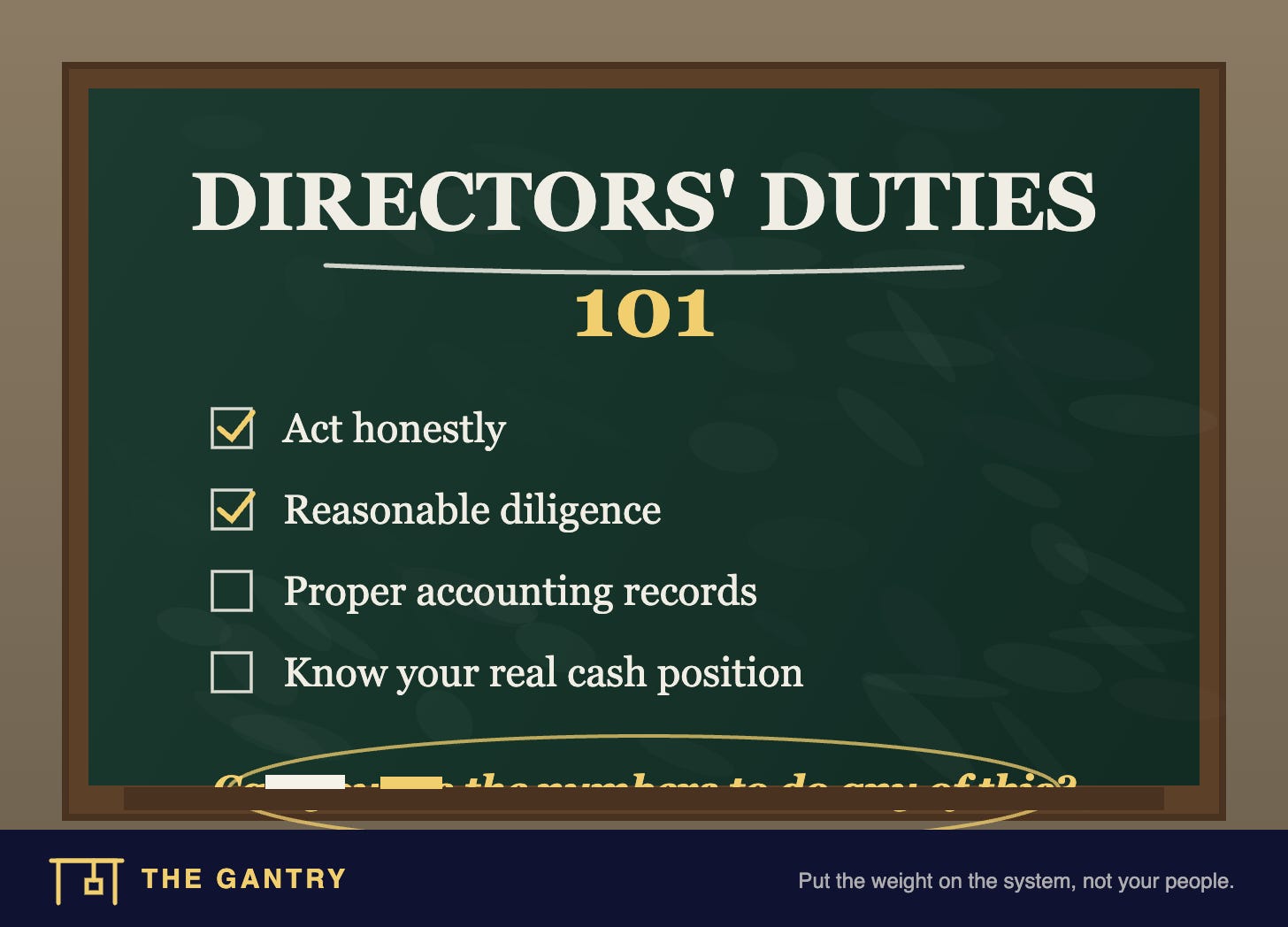
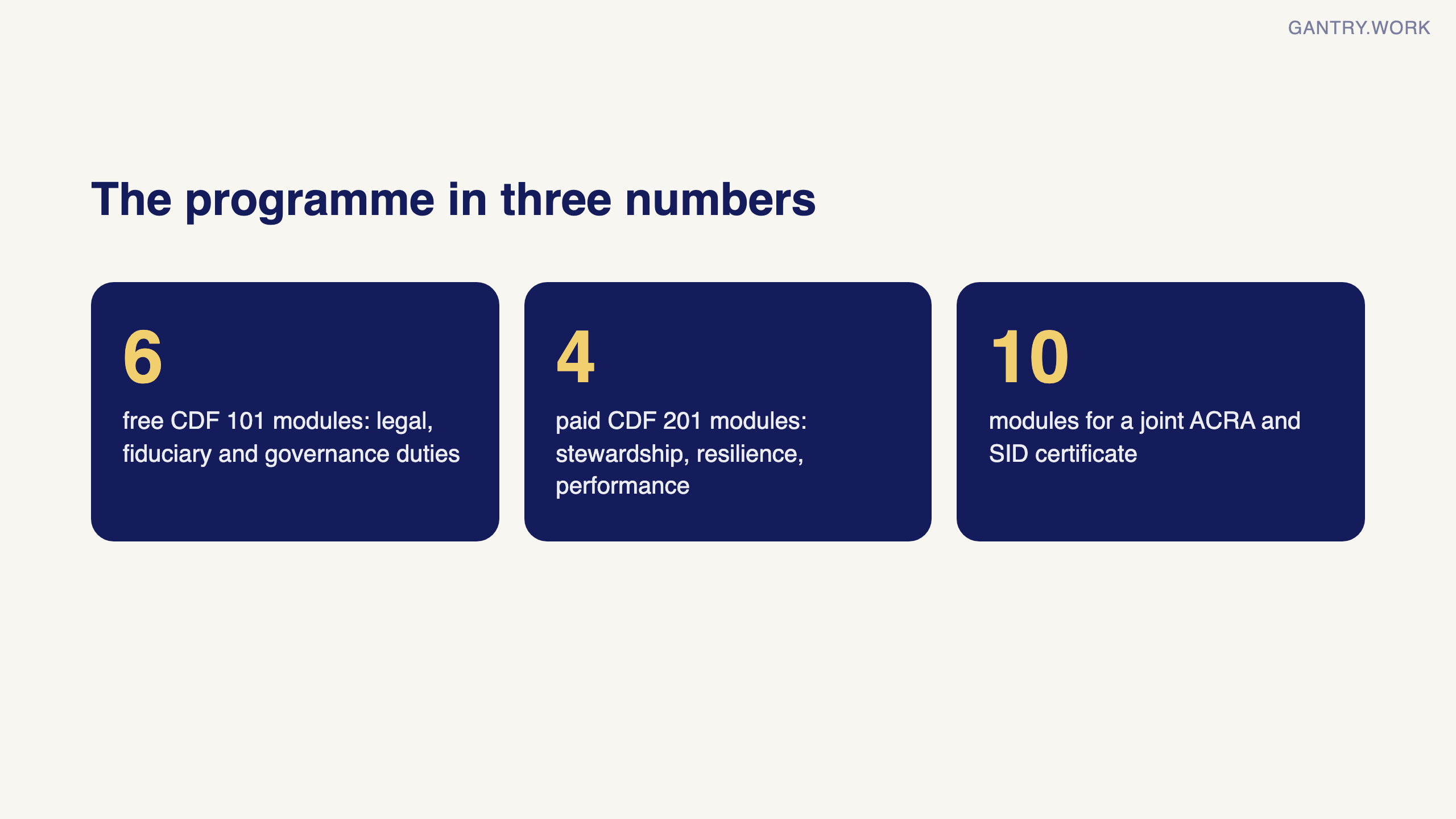
On 28 August, at the SID Directors Conference, ACRA and the Singapore Institute of Directors signed an agreement to build a formal training programme for company directors. It is called Company Director Fundamentals, it opens for registration in October, and the structure is worth noting: CDF 101 is six modules covering core legal, fiduciary and governance duties — and it is free. CDF 201 adds four paid modules on board stewardship, resilience and commercial performance. Complete all ten and you get a certificate issued jointly by ACRA and SID.
SID chief executive Emily Poon put the purpose in one line: good governance is not just about compliance — it is about making better decisions, managing risk and creating long-term value.
The coverage will frame this as a boardroom story. I think that misses who this is actually for.
The programme in 45 seconds
The short version: six free modules, four paid ones, a joint ACRA and SID certificate, and registration from October 2026. For an owner-director, the course explains the duties; current numbers are what let you meet them.
Most directors in Singapore have never been trained
Picture the word "director" and you see a listed-company board. But the overwhelming majority of directors in Singapore are nothing like that. They are owner-directors — the person who incorporated a Pte Ltd, put their own name on the ACRA form, and became a director the same day they became a shareholder and an employee.
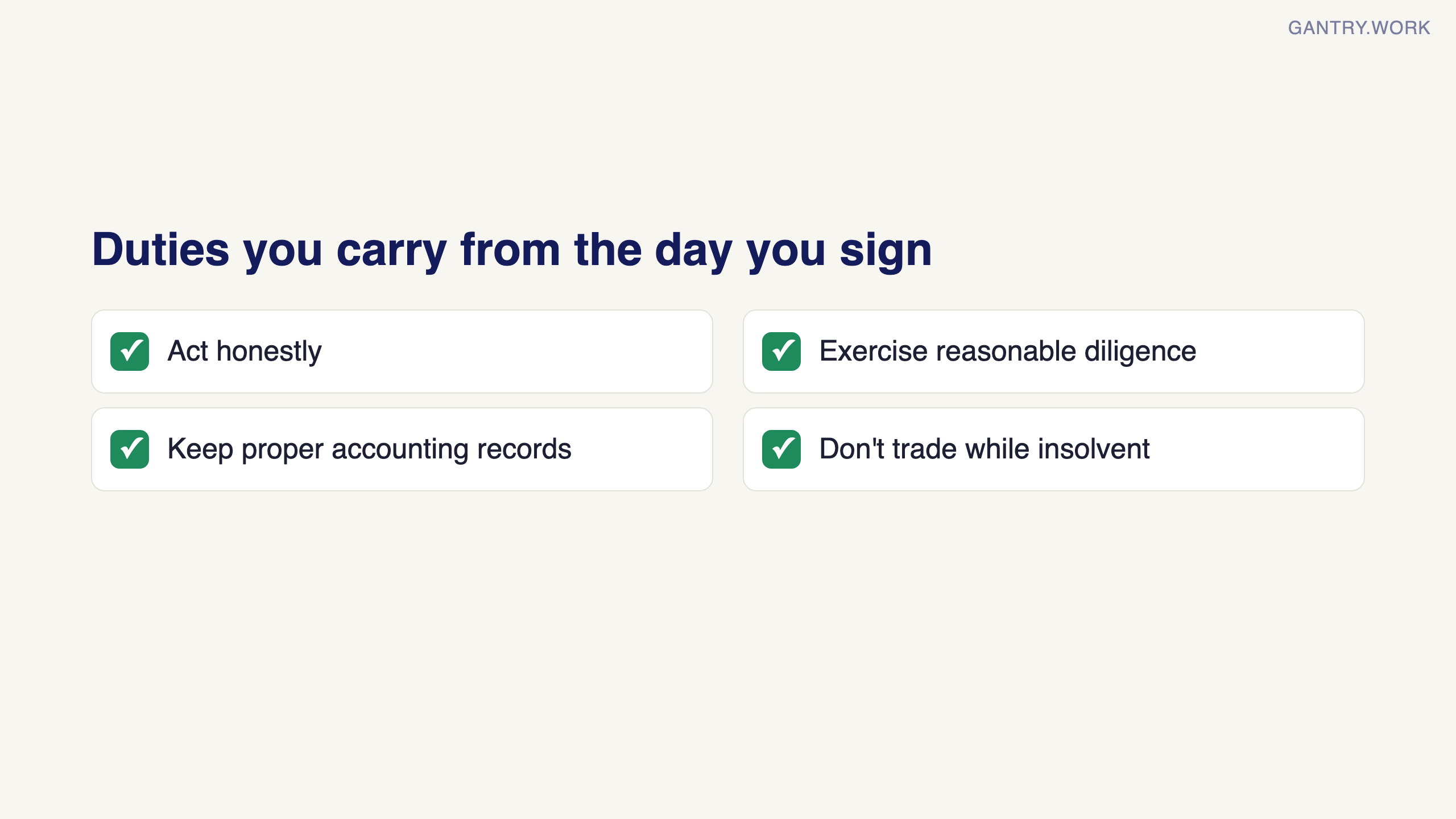
Nobody trained them. There is no licence, no exam, no induction. You sign, and from that moment you carry statutory duties — to act honestly, to exercise reasonable diligence, to keep proper accounting records, to not trade while insolvent — that are exactly the same duties a DBS board member carries. The law does not shrink because the company is small.
That is why a free, bite-sized, regulator-backed foundation course matters. It is not really aimed at the professionals who already sit through board training every year. It is aimed at the hundred-thousand-plus people who became directors by starting a company, and have been carrying the responsibility on instinct ever since.
Why now — what actually changed in the playbook
ACRA and SID are explicit that boards face growing legal, technological and business complexity. Translate that out of press-release language and three concrete things have changed for a small-company director in the last two years:
Your data now reaches regulators directly. InvoiceNow will feed invoice data to IRAS as it is issued. Digital lenders read your accounts through bank feeds. The gap between "what happens in the business" and "what the authorities see" is closing to zero.
Technology decisions became director decisions. Whether AI is drafting your quotes or a system is auto-approving purchases, someone is accountable for what the machine does — and it is not the machine.
The reporting perimeter keeps widening. Customers demand emissions data, banks demand current numbers, and "we are a small company" excuses less every year.
None of that was in the playbook most owner-directors learned by doing. Hence the school.
Our take: you cannot govern what you cannot see
Here is the part no training module will fix, and it is the reason this story belongs in this newsletter.
Every duty on the CDF syllabus assumes one thing: that the director can see the true state of the company. Reasonable diligence assumes the numbers you review are current. Solvency assumes you know your real cash position. Proper accounting records assume the records exist somewhere better than a spreadsheet only one person understands.
If your books close six weeks late, you are not governing — you are archaeology. You are making director-level decisions on a picture of the company as it was in July. A training certificate does not change that. A system of record does.
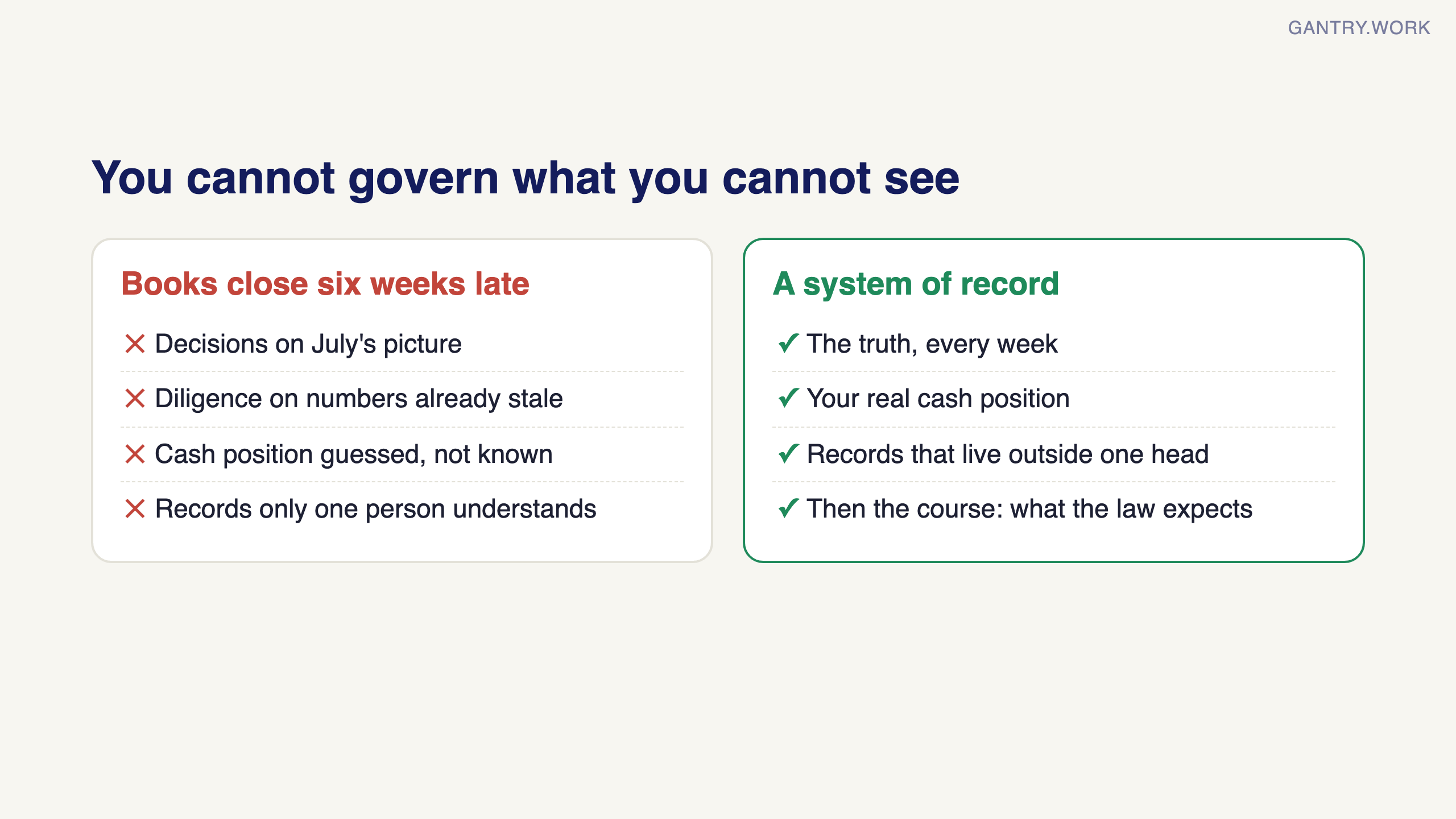
So the honest sequence for an owner-director is both, in this order: put the weight of record-keeping on a system that shows you the truth weekly, then take the free course so you know what the law expects you to do with that truth. Training without visibility is theory. Visibility without training is luck.
What to actually do
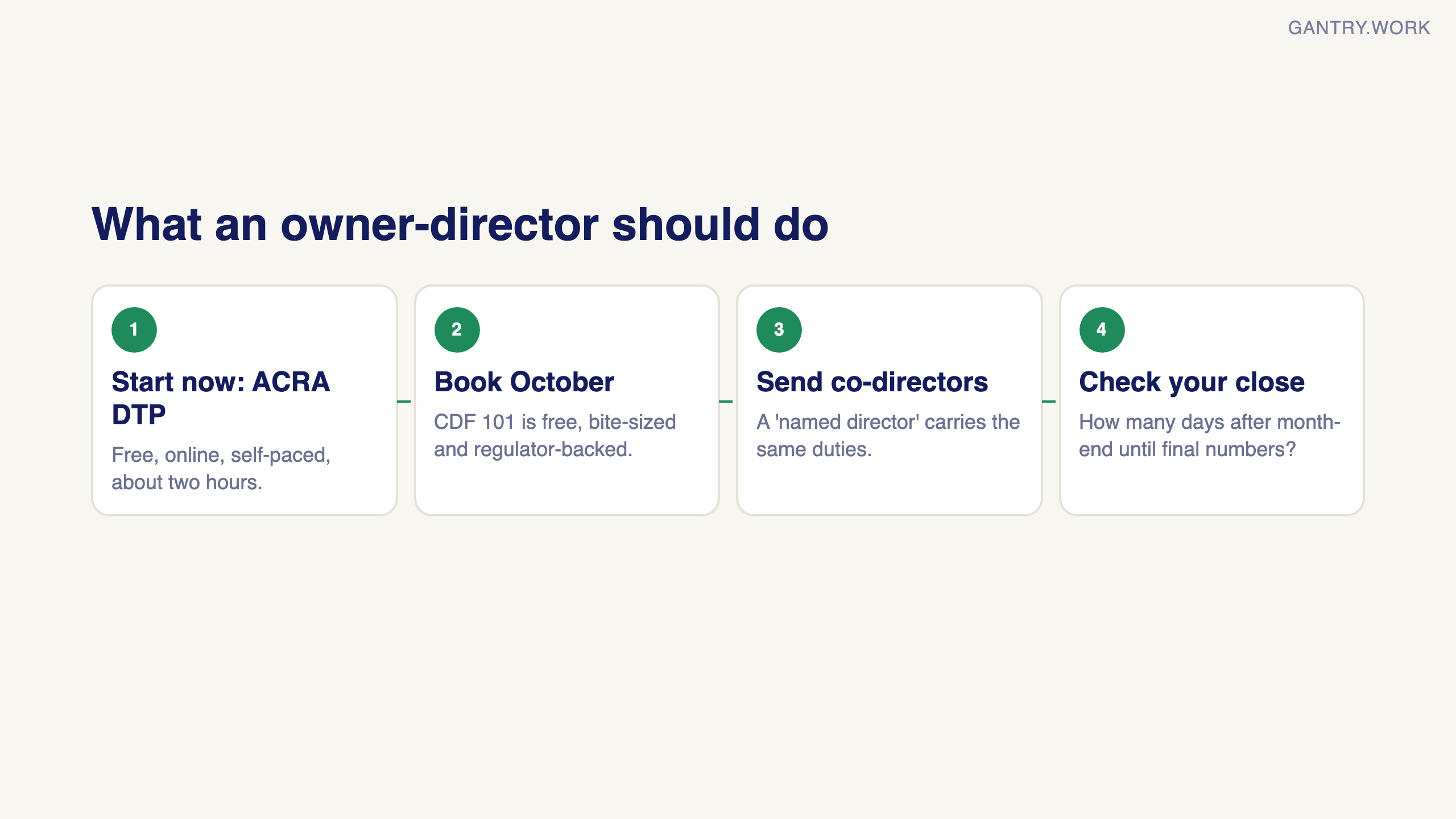
Put October in your calendar. CDF 101 is free, bite-sized, and jointly stamped by the regulator. If you are a director of your own company and have never been formally told what that means, this is the lowest-cost fix that exists.
Send your co-directors too. The spouse or friend who is "just a named director" on your ACRA record carries the same duties you do. Most of them have no idea.
Then look at your close. Ask how many days after month-end you actually see final numbers. That gap is the distance between you and the diligence the course will tell you the law expects.
Read the original coverage of the ACRA-SID directors training programme.
What is the ACRA and SID Company Director Fundamentals programme?
Company Director Fundamentals (CDF) is a director training programme developed by ACRA and the Singapore Institute of Directors (SID), announced on 28 August 2026 and delivered by SID. What the official pages say, checked 9 October 2026:
Structure. Two phases. CDF 101 is six complimentary modules on core legal, fiduciary and governance responsibilities. CDF 201 is four paid modules on board stewardship, organisational resilience and long-term business performance.
Format. Every module is bite-sized, so directors can learn at their own pace.
Who it is for. Second Minister for Finance Indranee Rajah said in her keynote that the free foundation is open to all current and aspiring directors, including foreign directors.
Topics in the paid phase. The Minister listed directors' duties, financial literacy, board and shareholder decision-making, corporate actions, and environmental, social and governance considerations.
Certificate. Complete all ten modules and you receive a Certificate of Completion from both ACRA and SID.
Who built it. ACRA and SID, supported by RSM Singapore and Rajah & Tann Singapore LLP, with a working group from the CPF Board, IRAS and the Workplace Safety and Health Council.
What comes after. ACRA says completing CDF 101 and 201 may help directors qualify for an SID accreditation programme.
How do you register, and is the course mandatory?
Registration opens in October 2026 through SID, and none of the official pages I checked on 9 October 2026 says the programme is mandatory.
ACRA's Directors Training Programme page, last updated 1 September 2026, says CDF registration opens in October 2026. On 9 October I found no CDF registration page on the SID website, and no published fee for CDF 201, so watch SID's professional development pages for the sign-up link. The press release and the Minister's speech present the programme as more accessible training; neither says a director must complete it.
You do not have to wait. ACRA's existing Directors Training Programme is free, online and self-paced, takes about two hours, and needs no account. Its eight modules cover the office of a director, directors' duties, the Companies Act, corporate income tax, CPF, employment law, workplace safety and productivity.
A course explains the duties; current numbers let you meet them, which is why a month-end that closes in days matters.
Sources, checked 9 October 2026: ACRA press release, 28 August 2026 (structure, free and paid phases, SID delivery, certificate, partners, registration in October 2026); Keynote by 2M Indranee Rajah at the SID Directors Conference 2026 (eligibility, paid-phase topics); ACRA Directors Training Programme (DTP format, cost and modules; CDF registration opens October 2026); SID Professional Development (no CDF page listed on 9 October 2026).
Frequently asked questions
Is the Company Director Fundamentals programme free? CDF 101, the first six modules, is complimentary. CDF 201, the last four modules, is paid; the fee was not published on 9 October 2026.
Who can take the ACRA SID Company Director Fundamentals course? Current and aspiring directors, including foreign directors of Singapore companies, according to the Minister's keynote of 28 August 2026.
Is Company Director Fundamentals mandatory for directors in Singapore? The official announcements do not say so. Treat it as voluntary training unless ACRA publishes a requirement.
What is the difference between CDF and ACRA's Directors Training Programme? The Directors Training Programme is ACRA's own free two-hour online course, available now. CDF is the new joint ACRA and SID programme: ten modules in two phases, with a joint certificate.
Start with the sixty-second check
The Systems Health Check tells you where your business runs on memory instead of records — the exact gap that makes director duties hard to discharge. Ten questions, no signup.

The free SME Systems Health Check at work: ten honest answers, a score and the biggest leak to fix first. Click the animation to try it.
Working on something similar? Connect with me on LinkedIn and tell me what you are working on. I read and reply to every message, and the questions people send become the next guides.
Want a second pair of eyes on your setup? Bring the process that keeps going wrong to a free 20-minute systems review. I'll tell you honestly what to fix first, or whether you need anything new yet.
How I test everything and how this site makes money: How The Gantry works.