

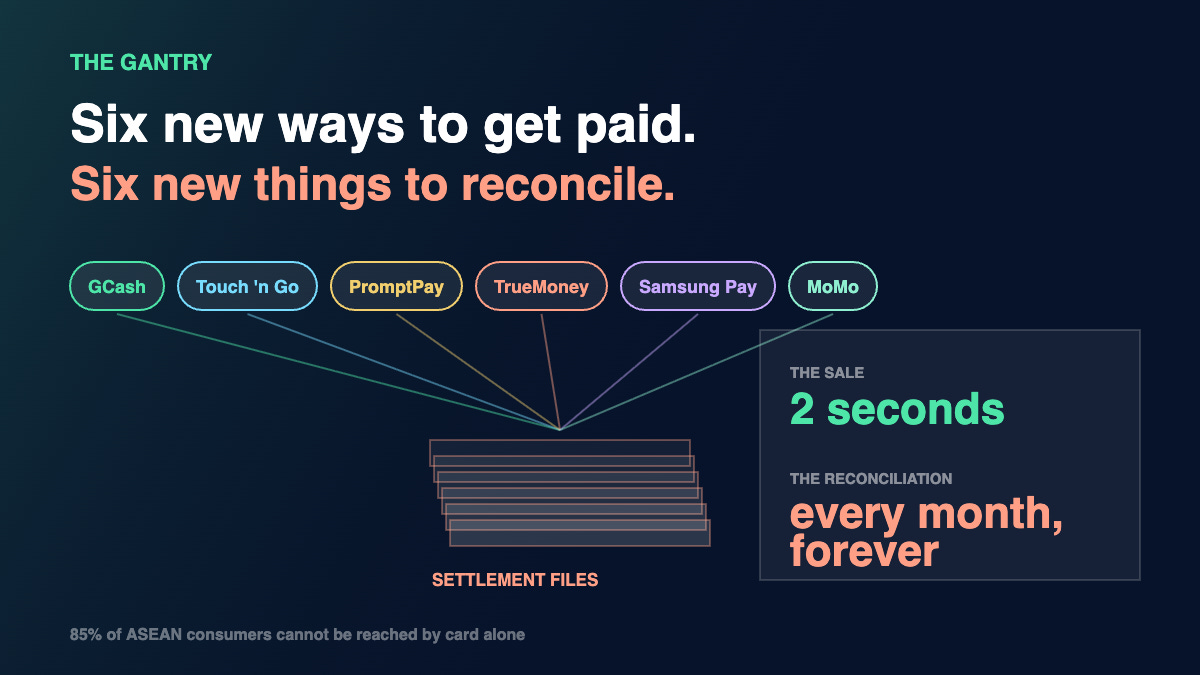
On 25 August, Stripe added six Asian payment methods to checkout: GCash in the Philippines, Touch ’n Go in Malaysia, PromptPay and TrueMoney in Thailand, Samsung Pay in Korea and MoMo in Vietnam. ShopeePay and SPayLater are slated to follow in the fourth quarter.
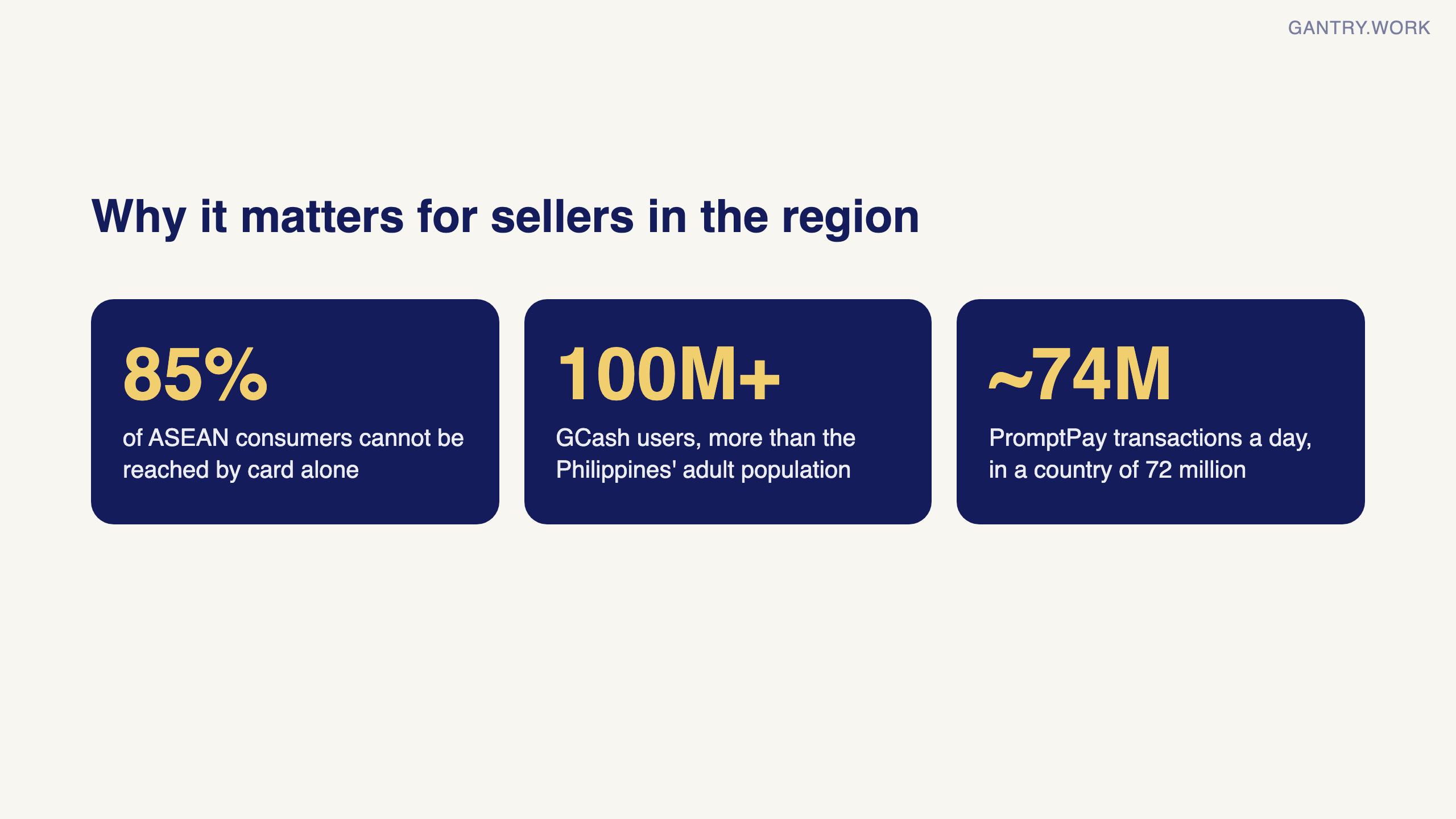
The headline number is that roughly 85% of ASEAN consumers cannot be reached by card alone. The supporting figures are startling. GCash passed 100 million users this year, more than the adult population of the Philippines. PromptPay has over 90 million registrations in a country of 72 million people and processes around 74 million transactions a day.
If you sell digital goods, software or services out of Singapore into the region, this is genuinely good news. You can now reach those customers without negotiating six separate agreements. That is real, and it removes a barrier that used to take months.
Now the part nobody writes about.
The whole argument in 55 seconds
The short version: each new payment method adds its own settlement file, fees and FX timing to your month-end, so connect the gateway to the ledger before you switch it on. The detail is below.
Every payment method is also an accounting object
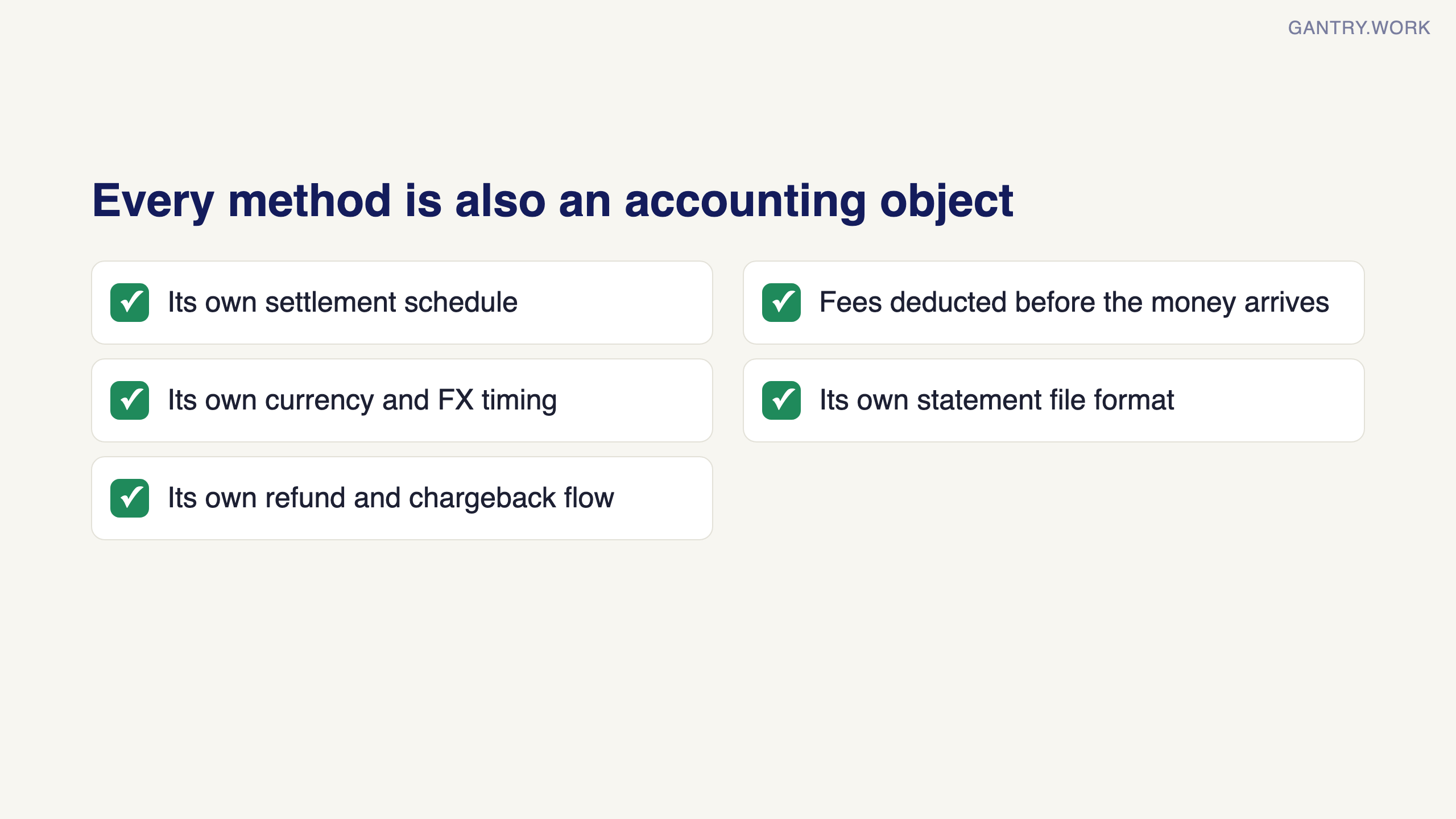
A payment method is not just a button on a checkout page. Each one brings its own settlement schedule — some settle next day, some in three, some weekly. Its own fee structure, deducted before the money reaches you. Its own currency and FX timing, so the amount you booked and the amount you banked will not match. Its own file format for the statement your finance person has to reconcile. And its own refund and chargeback flow, with different timing again.
Add six methods and you have added six of each of those. The sale takes two seconds. The reconciliation takes hours, every month, forever.
I have seen this exact thing turn a growth win into a finance problem. Revenue up 30%, and the month-end close goes from six days to fourteen because one person is now matching payout batches to invoices by hand across multiple gateways and currencies. Nobody counts that cost when the decision is made, because it does not appear until two months later — and it appears as "finance is slow" rather than "we added three payment methods".
The gross-versus-net trap
Here is the specific mistake I see most often, and it quietly misstates your accounts.
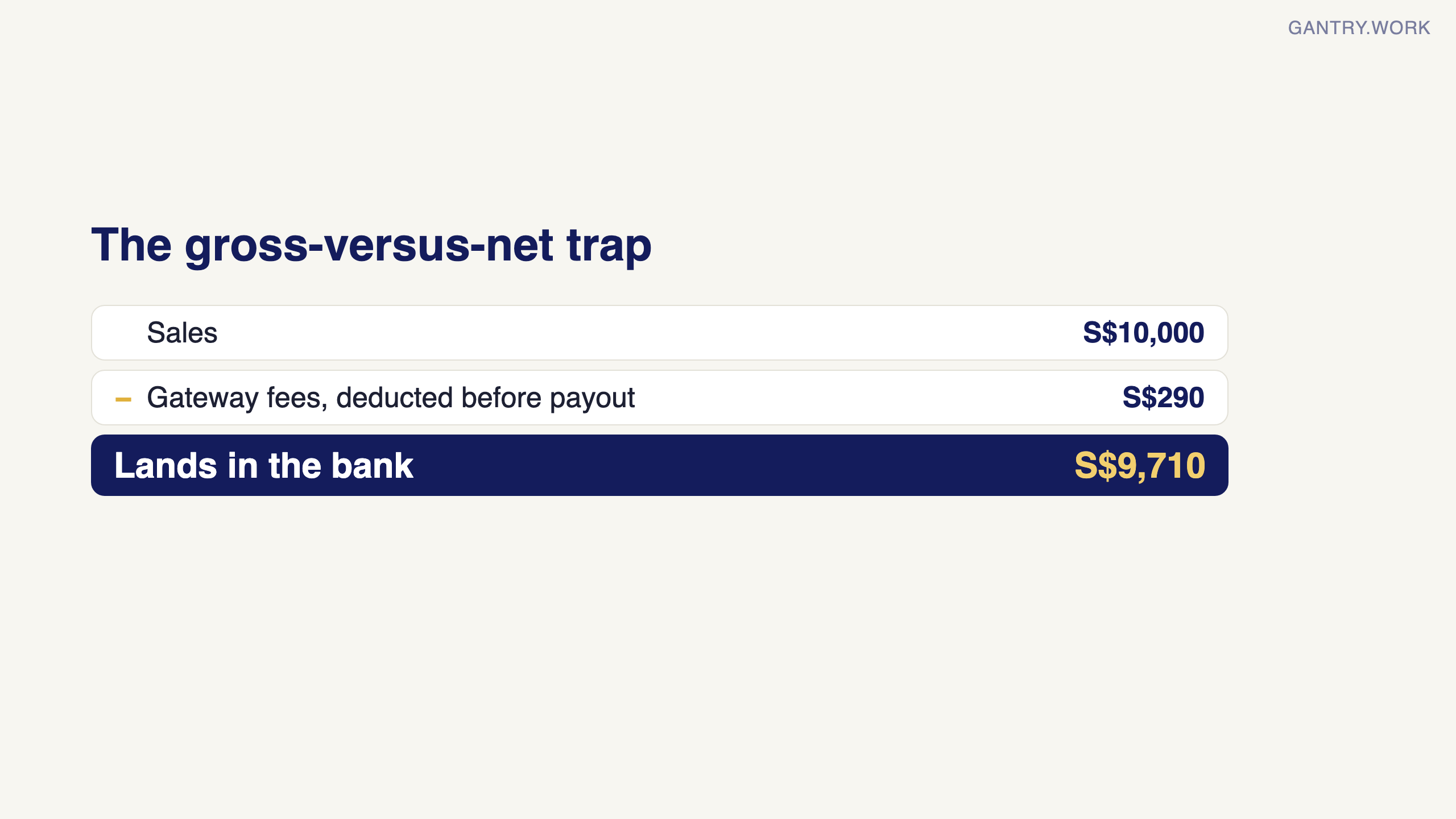
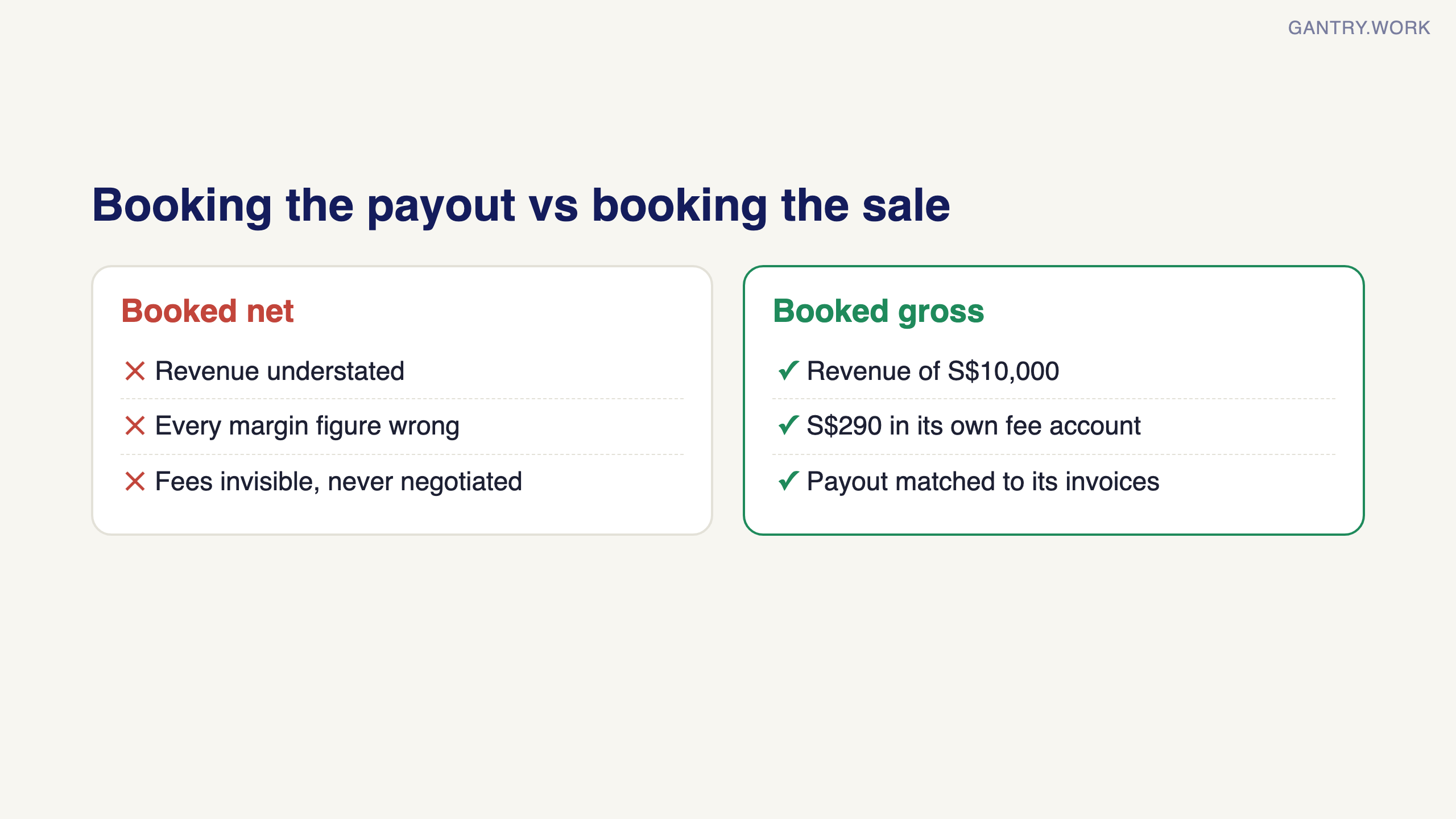
The gateway pays you net. You sold S$10,000, the fees were S$290, S$9,710 lands in the bank. The fast thing to do is book S$9,710 as revenue.
Do that and two things break. Your revenue is understated, so every margin figure you look at is wrong. And your payment processing cost — which is a real, growing, negotiable expense — never appears anywhere you can see it, so you never negotiate it and you never notice when it drifts.
With one gateway that is an annoyance. With six, in four currencies, it is a hole in your reporting.
Our take: connect the gateway to the ledger before you switch it on
The rule is simple. Do not add a payment method until the settlement file can be imported and matched automatically.
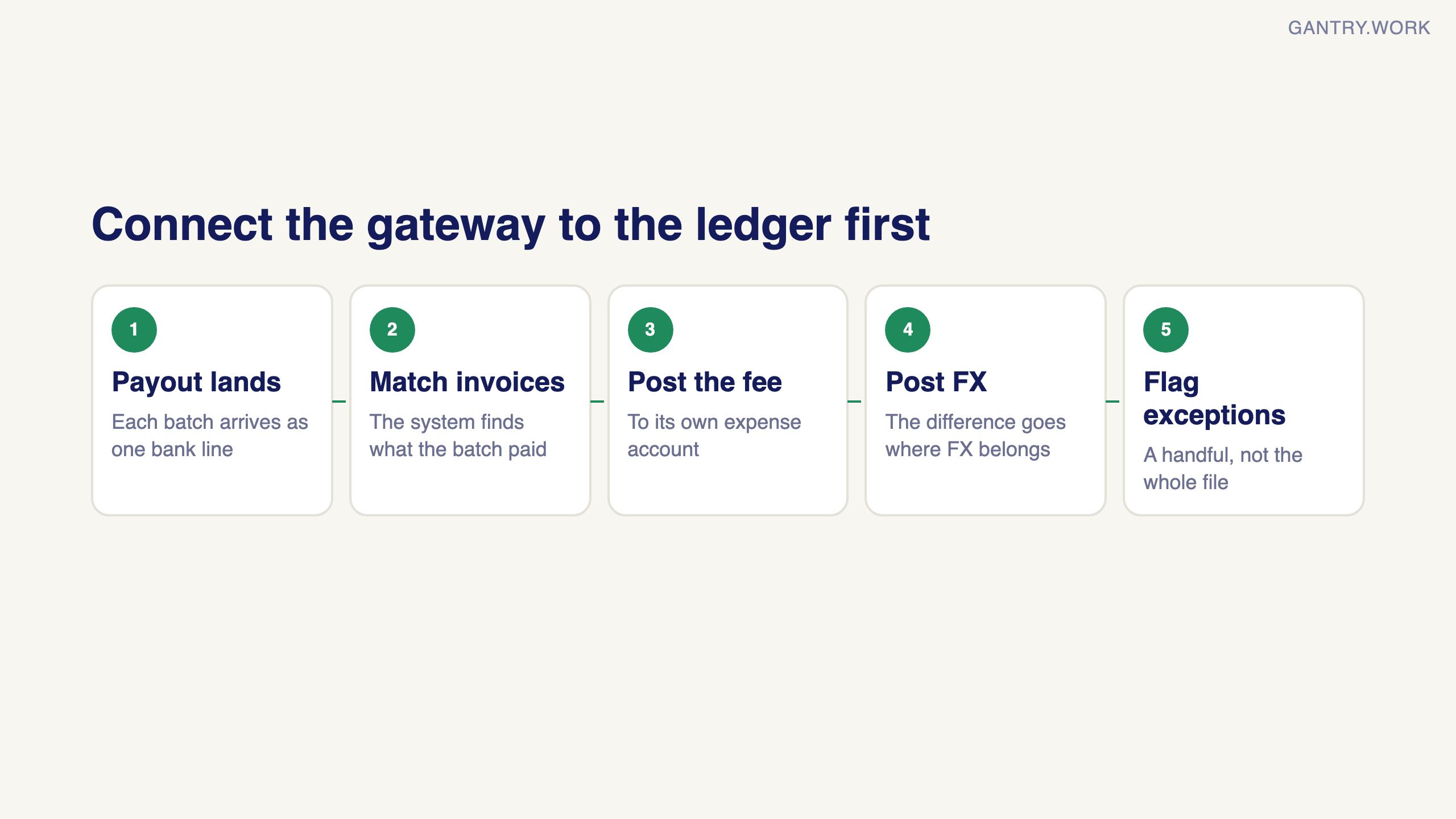
What that looks like in practice: the gateway feeds into your accounting or ERP system directly. Each payout batch arrives as a single bank line. The system matches it to the underlying invoices, posts the processing fee to its own expense account, posts the FX difference where FX differences belong, and flags only the items it could not match — which should be a handful, not the whole file.
Set up properly, adding a seventh payment method costs you a configuration change, not another two days a month of somebody’s life. Set up badly, every expansion into a new market taxes your finance team a little more, until closing the books becomes the thing that limits how fast you can grow.
That is the actual decision hiding in this announcement. Not "should we accept GCash" — obviously yes, if you sell to the Philippines. It is "can our books absorb it".
Before you turn any of them on
Ask your finance person one question: when the money from a payment gateway lands in our bank account, how do we currently work out which invoices it paid?
If the answer involves the word "manually", fix that first. It will take a fraction of the time the next twelve months of reconciliation would have.
Read the original report on Stripe’s ASEAN payment expansion.
Connecting the gateway to the ledger, in practice: if your books are in QuickBooks, free Make templates record each Stripe payment as it happens, either as a sales receipt per charge or by copying each Stripe invoice. Post them to a Stripe clearing account and record fees and payouts from it, and the new payment methods reconcile like cards do.
Affiliate links: if you sign up to Make through them, The Gantry may earn a commission at no extra cost to you. How I test tools and how this site makes money.
Put a number on your close
The Month-End Close Cost Calculator prices exactly this: what your current close burns in salary each year, and what the same close would cost if it took three days instead of fifteen. Free, no signup.

The free month-end close calculator at work: days and people in, what a slow close really costs out. Click the animation to try it.
Working on something similar? Connect with me on LinkedIn and tell me what you are working on. I read and reply to every message, and the questions people send become the next guides.
Want a second pair of eyes on your setup? Bring the process that keeps going wrong to a free 20-minute systems review. I'll tell you honestly what to fix first, or whether you need anything new yet.
Where should the money land? The best business account in Singapore compares the banks with Airwallex, Wise and Aspire on fees, FX and Xero feeds.
Comparing Airwallex with Stripe? The Airwallex review explains where they overlap and where they do not.
How I test everything and how this site makes money: How The Gantry works.