


The free SME Systems Health Check at work: ten honest answers, a score and the biggest leak to fix first. Click the animation to try it.
IMDA just published a case study worth more than most consulting reports: Allied Container Group — 50 years old, 300+ staff, one of Singapore’s biggest container haulage operators — cut warehouse processing time by 25% and delivery times by 10-15%.
The case study in 45 seconds
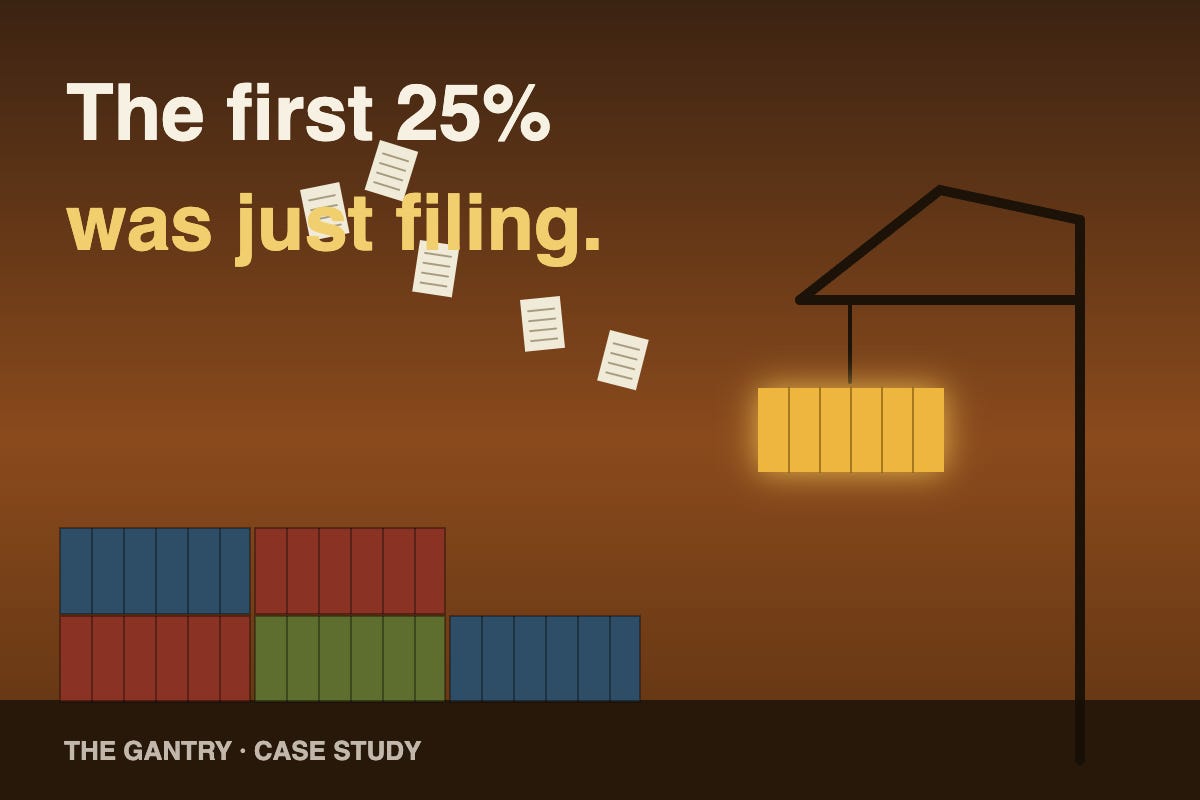
The short version: Allied's first 25% came from putting every document about a job in one place, and automation came second. The 20-person version follows.
Your first instinct will be: “They have 300 staff and a CTO. Not my league.” That’s the wrong takeaway. Read what they actually did, in the order they did it.
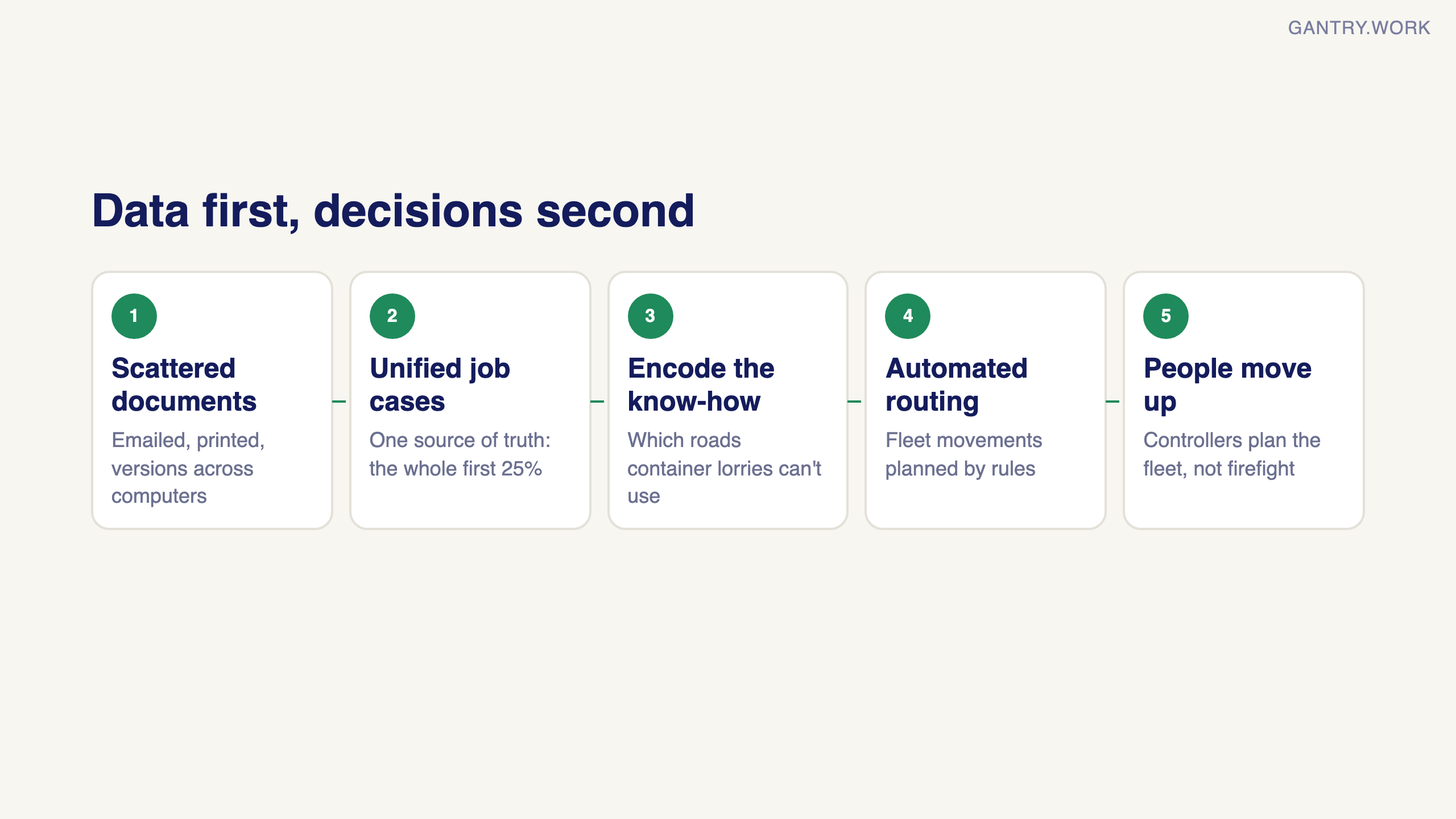
Their CTO describes the starting point: “Warehouses deal with a huge volume of documents either emailed or printed out and given to us. Documents were scattered everywhere, and even when digitised, they existed as separate files with different versions across computers.”
Sound familiar? That’s not a 300-person problem. That’s every SME I’ve ever walked into.
And here’s the part I want you to sit with: their first win — the entire 25% — came from fixing exactly that. They consolidated scattered documents into unified job cases with a single source of truth. No AI. No robots. Filing, done properly, at last.
Only after the data was trustworthy did they automate decisions: a container routing system that plans fleet movements automatically — even knowing which roads container lorries aren’t allowed on. That’s their traffic controllers’ hard-won knowledge, encoded into rules that run without them. Delivery productivity up 10-15%, and the controllers moved up to fleet planning instead of firefighting.
That sequence is the whole lesson. Data first, decisions second. Companies that flip the order — bolting automation onto messy data — don’t automate their operations. They automate their errors, at scale, faster than any human could make them.
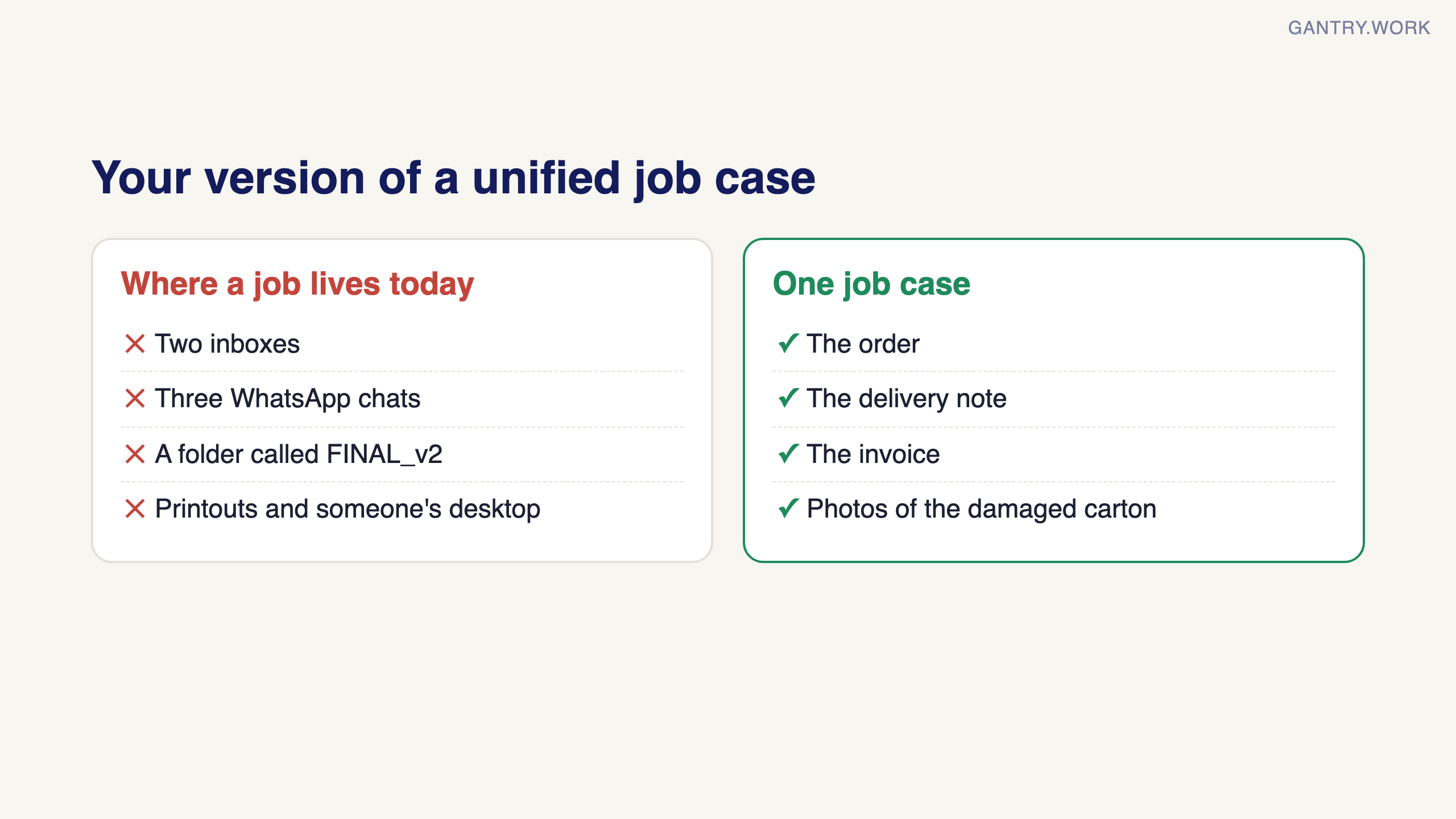
The 20-person version of Allied’s playbook doesn’t need a CTO or an in-house dev team. Your “unified job case” is one system where the order, the delivery note, the invoice, and the photos of the damaged carton all live together — instead of across two inboxes, three WhatsApp chats, and a folder called FINAL_v2.
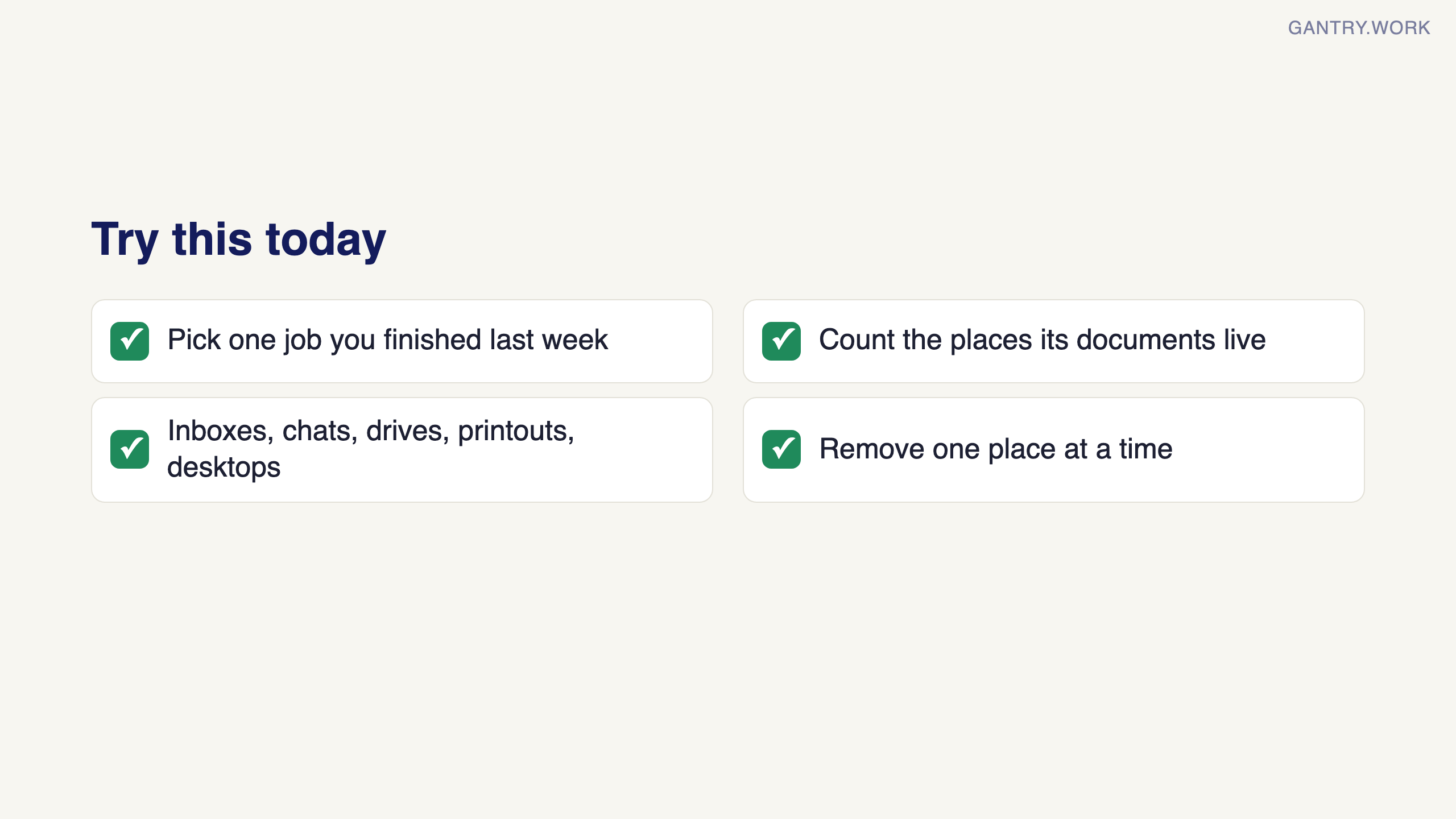
Try this today: pick one job you completed last week and count the number of places its documents live. Email threads, chat groups, shared drives, printouts, someone’s desktop. That number is your version of Allied’s starting point — and every place you eliminate is a slice of your own 25%.
Half a century old, and their breakthrough was getting every document about a job into one place. What would 25% faster operations be worth to you this year?
Source: IMDA — “25% faster warehouse process, fewer errors: how Allied Container Group transformed operations by going digital”, 5 Aug 2026.
Working on something similar? Connect with me on LinkedIn and tell me what you are working on. I read and reply to every message, and the questions people send become the next guides.
Want a second pair of eyes on your setup? Bring the process that keeps going wrong to a free 20-minute systems review. I'll tell you honestly what to fix first, or whether you need anything new yet.
How I test everything and how this site makes money: How The Gantry works.