



The free SME Systems Health Check at work: ten honest answers, a score and the biggest leak to fix first. Click the animation to try it.
UMC — one of the world’s biggest chip foundries — announced it’s expanding cleanroom capacity in Singapore to meet AI demand. New equipment, more silicon photonics, and a reinforcement of Singapore as its largest manufacturing site outside Taiwan.
Buried in the announcement is one sentence from Chairman Stan Hung that every SME owner should tape to their monitor: “With the building shell already built, we can expand cleanroom capacity efficiently as customer demand ramps.”
The argument in 40 seconds
The short version: UMC built the building before demand arrived, and your equivalent is the plumbing from orders to cash. Build it while the pressure is off.
Why UMC poured concrete years early
Read that again. UMC poured concrete for an empty shell years before the demand existed. Why? Because when the ramp comes, you can’t build fast enough. The shell is cheap when you don’t need it and priceless when you do.
Your shell is not concrete. It is your operating system
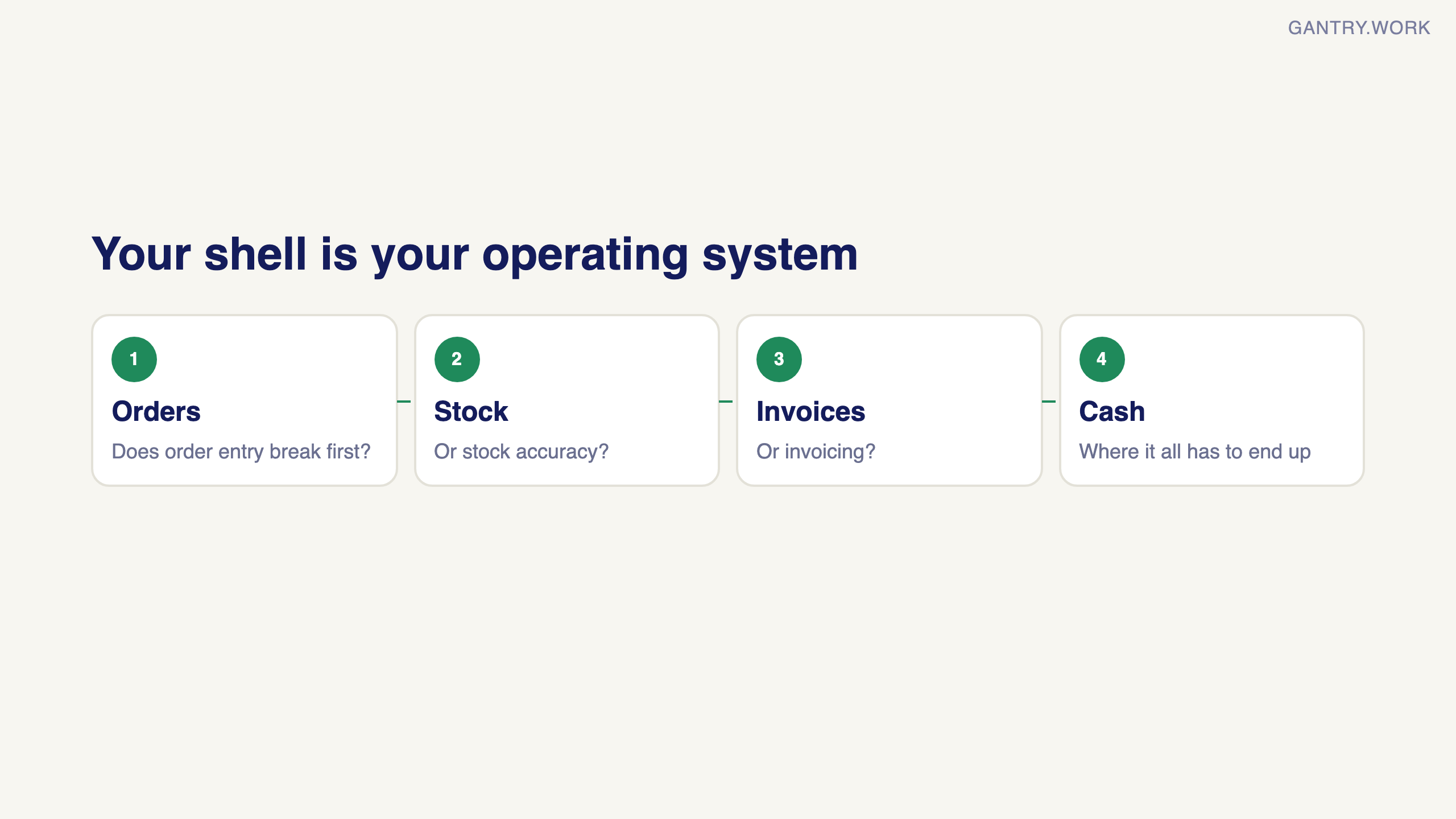
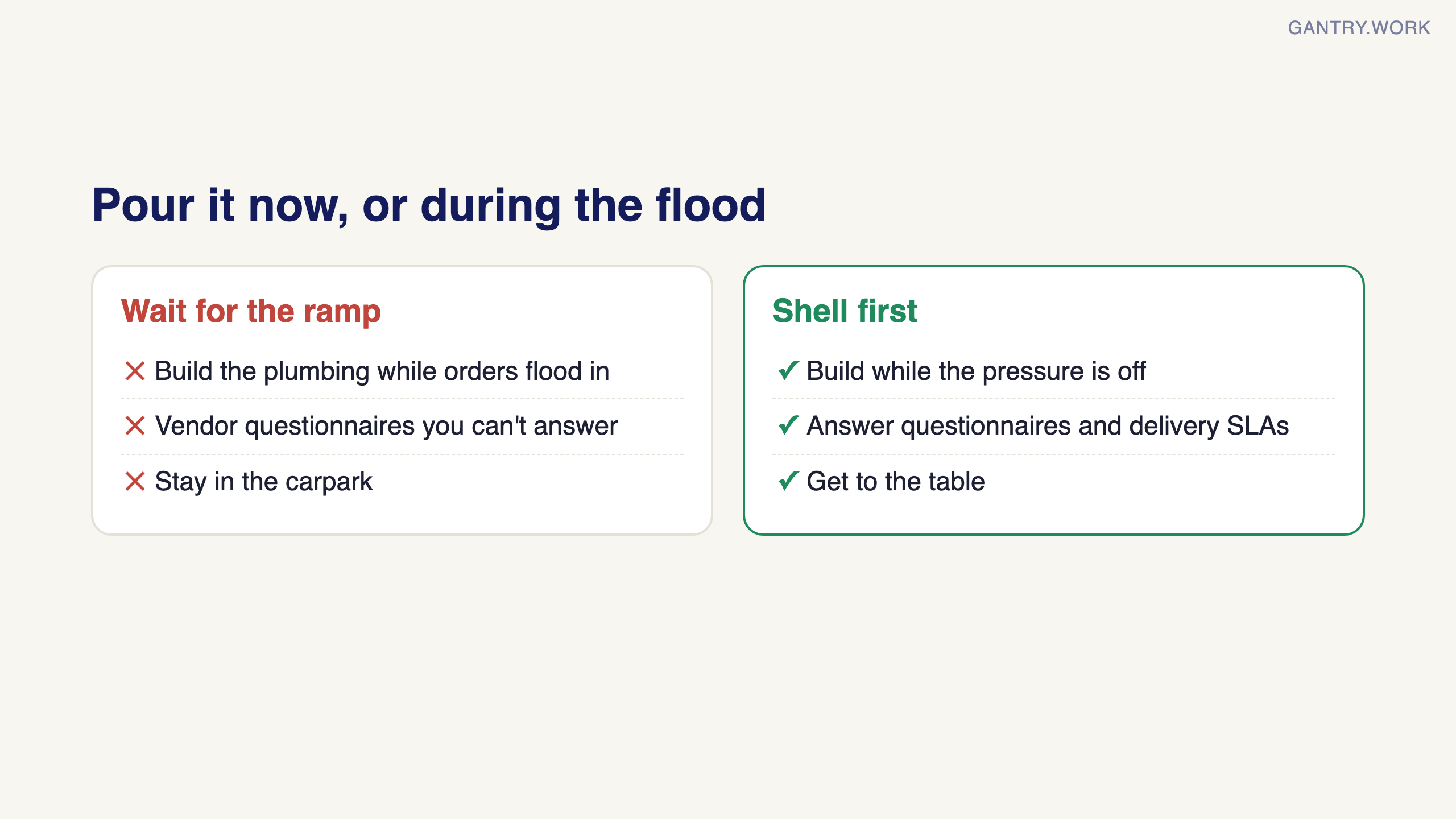
Now translate that to your business. Your “shell” isn’t concrete. It’s your operating system — the plumbing that connects orders to stock to invoices to cash. And most SMEs do the exact opposite of UMC: they wait for the big customer to land, then try to build the plumbing while the orders are already flooding in.
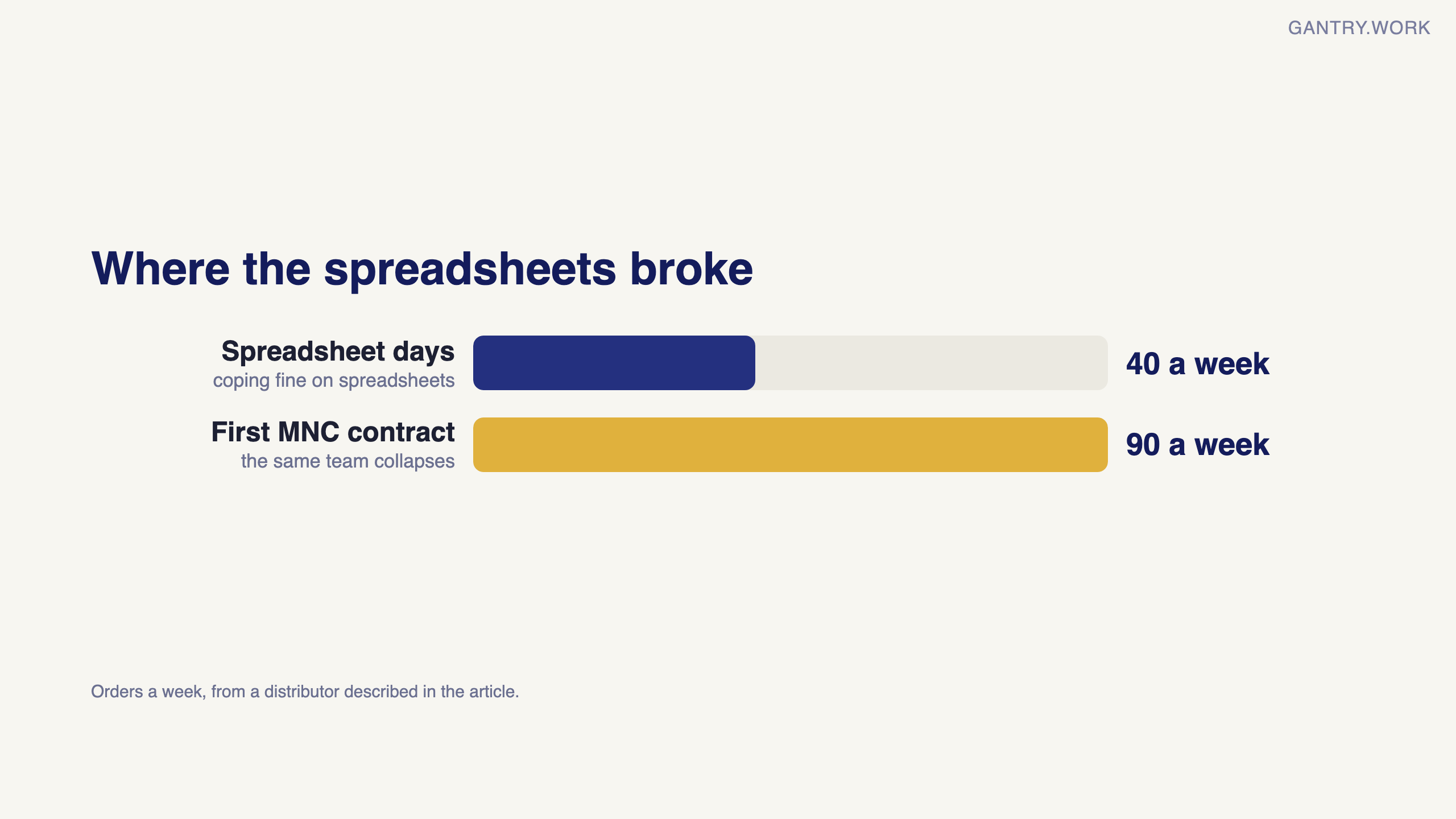
I’ve watched it happen. A distributor wins its first MNC contract — the champagne moment — and then discovers what comes with it: EDI requirements, batch traceability, on-time-in-full reporting, monthly vendor scorecards. The team that was coping fine on spreadsheets at 40 orders a week collapses at 90. The dream contract becomes the thing that breaks them, not because they lacked capacity in the warehouse, but because they lacked capacity in their systems.
A second layer for Singapore suppliers
There’s a second layer here for Singapore SMEs specifically. When a fab this size expands, the ripple reaches the whole local supply chain — precision engineering, maintenance contractors, logistics, cleanroom services, component distributors. Those contracts are real, and they arrive as vendor questionnaires and delivery SLAs, not as friendly phone calls. The organised SMEs get to the table. The rest stay in the carpark.
Run UMC’s test on yourself this week
So run UMC’s test on yourself this week: if your biggest customer doubled their orders on Monday, which process breaks first? Order entry? Stock accuracy? Invoicing? That answer is your shell — and the time to pour it is now, while the demand hasn’t ramped and the pressure is off.
UMC doesn’t wait for the ramp to build the building. Why do you?
Source: Singapore Business Review — UMC expands Singapore cleanroom capacity on rising AI demand, Aug 2026.
Working on something similar? Connect with me on LinkedIn and tell me what you are working on. I read and reply to every message, and the questions people send become the next guides.
Want a second pair of eyes on your setup? Bring the process that keeps going wrong to a free 20-minute systems review. I'll tell you honestly what to fix first, or whether you need anything new yet.
How I test everything and how this site makes money: How The Gantry works.